
Notes From the Road
Gratitude, unease, and insecurity. Reflections from the 1929 tour.
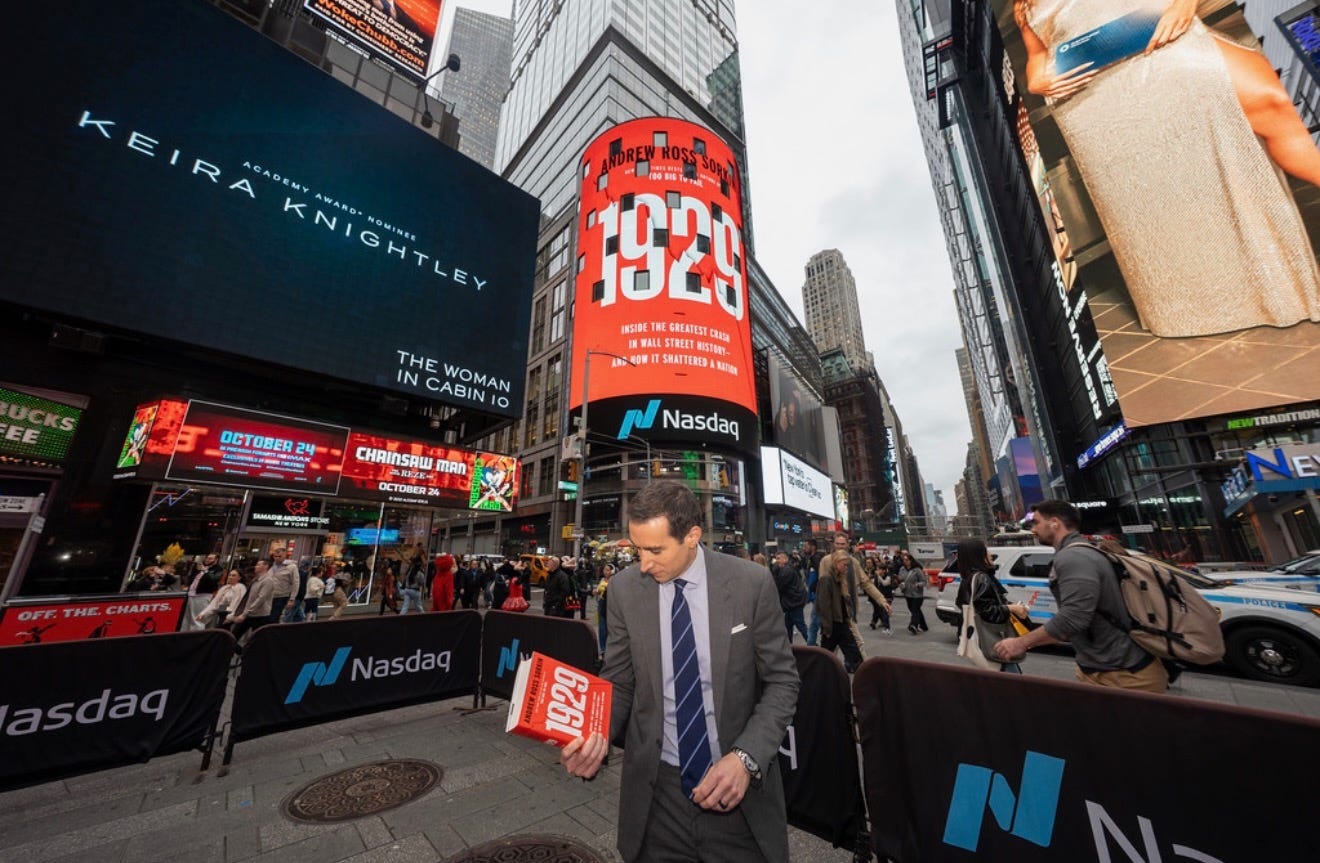
1. The Uneasy Season
Over the past four weeks, I’ve been on the road — Los Angeles, San Francisco, Austin, Washington D.C., Boston, Philadelphia, London, among others, and now (on my way) back to New York — talking about 1929: Inside the Greatest Crash in Wall Street History—and How It Shattered a Nation.
Before anything else: thank you.
The response has been overwhelming. You’ve shown up — in bookstores, auditoriums, and even airport terminals — with stories, questions, and reflections that reminded me why I wrote the book in the first place. 1929 isn’t just about history; it’s about human nature. (Here’s an excerpt from the book.) Seeing how deeply that resonates in 2025 has been humbling.
The book has been selling out. The reviews have been beyond my wildest hopes. It remains on The New York Times Best Seller list — currently at No. 3 — and the publisher has already begun a second printing. Those numbers are gratifying, but what’s mattered most has been the conversations: late-night exchanges in hotel lobbies, hallway whispers, people admitting — sometimes sheepishly — that they see parts of themselves in the characters of the book.
Over the past month, I’ve had more conversations about 1929 than I can count — on television, on podcasts, in print, and here on Substack. I won’t try to list everyone for fear of leaving someone out, but I’ll say this: the questions have been as powerful as the answers.
Everywhere I’ve gone, I’ve felt two overlapping emotions: unease and gratitude. Gratitude for the generosity of readers who’ve shared their stories. Unease because almost everyone, no matter how successful, seems to be wrestling with the same questions: What’s coming next?
That question — what’s coming next? — has quietly haunted nearly every conversation I’ve had with people at the bottom of the ladder and the top. CEOs, founders, investors, artists — people who seem to have “made it” — all confess to feeling some version of the same thing: they’re not sure it’s real, or that it will last.
I’ve written before that the most successful people I’ve known often carry a deep sense of insecurity — sometimes the very thing that propels them forward. It’s the drive to prove something, to outrun the moment, to silence the doubt. That insecurity can look like ambition from the outside, but up close, it’s an urgency to stay worthy of the story being told about them. (I’m afflicted by this too.)
Lately, I’ve been struck by how universal that feeling is — not just among executives and entrepreneurs, but everywhere. It’s the parent trying to keep up. The creator wondering if their audience will still care tomorrow. The investor trying to outperform themselves.
Everyone is trying to show confidence, but almost no one feels it.
Maybe that’s the real story of this moment: the dissonance between how things look and how they feel.
📸 One Moment That Mattered
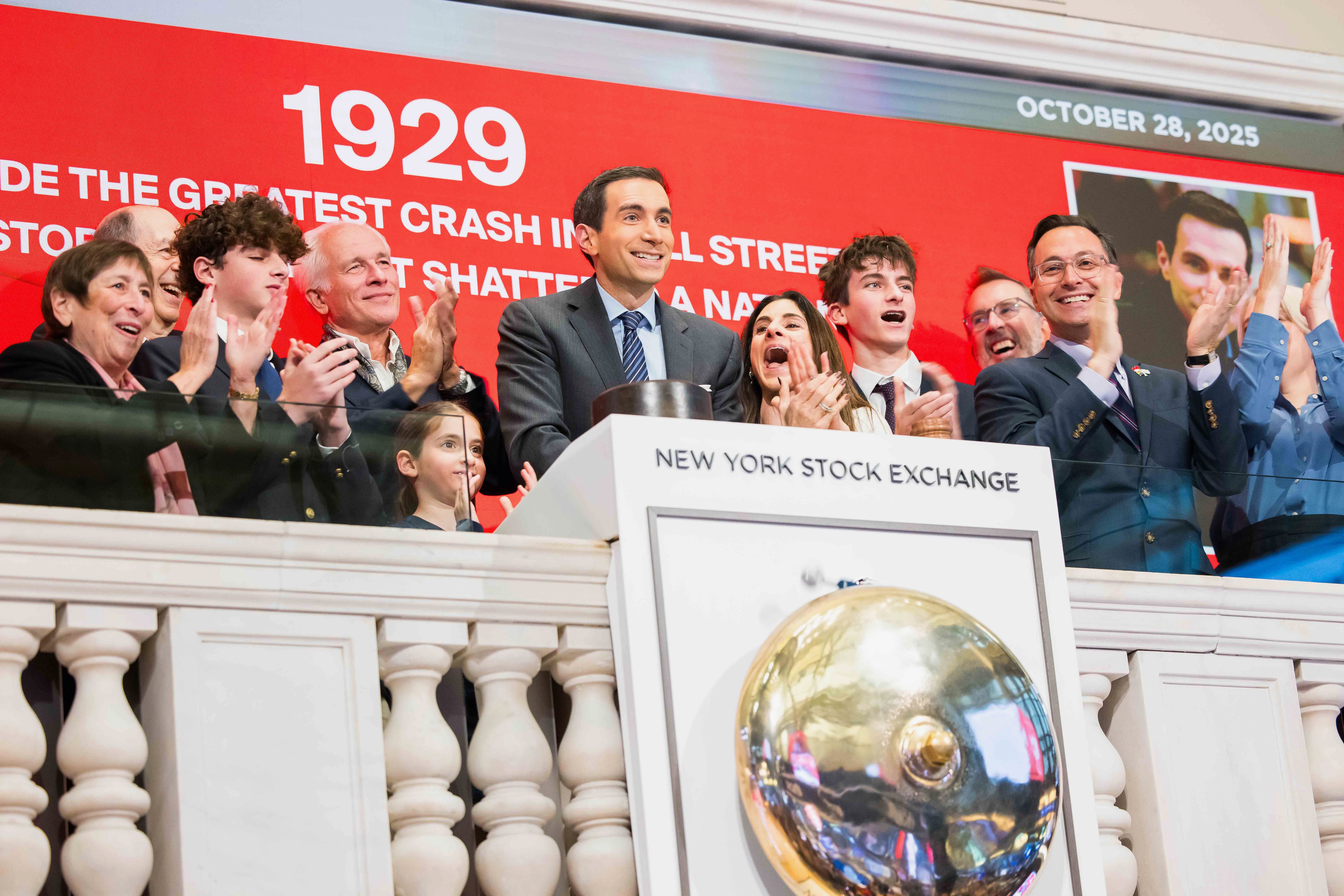
Standing on the balcony of the New York Stock Exchange — the stage where so many scenes from the book unfold — with my family, ringing the opening bell to mark the release of 1929 was one of those rare full-circle moments.
After eight years of research, late nights, rewrites, and deadlines, my kids finally saw that all those hours away meant something.
For a brief second, they felt it too — and what might have been just relief turned into something far rarer: pure joy.
2. Stuff I Read on the Road (That Might Make You Think, Too)
A few pieces that stayed with me on trains, planes and automobiles — each touching some corner of leadership, identity, or the strange politics and economy of our age:
🧭 The Surprising Success of Hands-On Leaders — Harvard Business Review
Why the most effective leaders right now are the ones willing to roll up their sleeves.
It made me rethink how delegation can sometimes erode trust more than it creates efficiency.
🌏 China’s Exports to the U.S. Surge Despite Trump-Era Tariffs — The New York Times
An interactive look at how China’s export machine has adapted and rebounded despite trade-war restrictions.
A reminder that the global economy is more resilient — and more interdependent — than our politics admit.
📘 “Why I Am Resigning” — The Atlantic
A federal judge’s powerful essay on stepping down amid growing political pressure on the judiciary.
It made me think about how institutions we assume are stable are often not.
🧑💼 Does Attorney-Client Privilege Survive When AI Listens? — Corporate Compliance Insights
This piece explores how commonplace AI tools could undermine the attorney-client privilege by inserting a “third party” into communications between clients and counsel. Corporate Compliance Insights
It made me think about what happens when the tools we trust bring hidden vulnerability?
🧠 Why Being Authentic Holds You Back — Harvard Business Review
A look at how clinging too tightly to “being yourself” can limit growth.
We talk a lot about the word. authenticity. Maybe too much.
If you read something that made you think differently, reply here.
3. A Pair of Essays (And How I Ended Up Arguing With My Own Book)
In October, I published two pieces related to the book in The New York Times:
In the first, I laid out the parallels between 1929 and today — from private equity and crypto to the psychology of leverage. I didn’t spell them out in the book itself, because I wanted readers to draw their own conclusions — and because I hope 1929 will feel timeless, its lessons shifting as history repeats itself in new forms.
In the second, I found myself wrestling with the other side of the story. 1929 has been read, rightly, as a warning — but I wanted to ask whether speculation, for all its dangers, is also the force that built America’s greatness.
“Speculation didn’t destroy America. Speculation built America.”
That essay was, in some ways, me talking back to my own book — questioning whether our obsession with crashes is masking the value of risk-taking. I’ve met so many who live that tension — builders haunted by collapse, dreamers proud of their daring, all quietly worried about failure.
4. How You Can Support 1929
This book was eight years of research, writing, rewriting, and second-guessing.
If you’ve already read it — thank you.
If you haven’t yet, here are a few ways to keep the conversation going:
📚 Buy or gift a copy — from your local bookstore, Bookshop.org, or Amazon.
✍️ Leave a short review on Amazon or Goodreads — it helps more than you’d think.
💬 Invite the book into your company, class, or book club.
📰 Share this newsletter. The more people thinking about what history can teach us, the better our odds of not repeating it.
5. A Final Note
This newsletter has no cadence or schedule — just my occasional thoughts from the road spurred by my outside projects that don’t fit anywhere else. This is the first one I’ve ever written and I don’t know when the next one will come.
If you want a daily dose of my thoughts and the most important news of the day in your inbox, I hope you’ll subscribe to DealBook. (I’ve been publishing it since 2001.)
And if you want to see me discussing the news and interviewing newsmakers every morning, please tune into Squawk Box on CNBC.
Thank you for reading, for showing up, and for making the last few weeks — and the last eight years — worth it.
— Andrew
Thank you…for being there M-F at 6am with my coffee on Squawk Box, for being in my INBOX M-S via DealBook, for Too Big to Fail that is on my living room side table, and now for 1929. Your balance and insight are SO WELCOME and help me try to make sense of our past,present and future!
Andrew,
About 1929 is a great read for the holidays! We’ll be publishing a positive book review in AI World Journal and recommending it to our audience. https://aiworldjournal.com/